(Words that make me feel and think in Spanish)
As someone who received her education via the American school system, information and ideas were highly connected to the English language. My most personal thoughts inside my head to this day are in English. This post is part of my blog that attempts to stop neglecting the other side of me, the beautiful culture that has been put on a waitlist by no-one other than myself. Cultura mia, allow me to start walking next to you so that one day my body is able to run, feel, and think in Spanish without feeling like my chest is going to explode from dishonor.
Excerpt from The Plants Are Burning: In 2008 my mother discovered my father was cheating Green glass flew everywhere as my dad shrieked in horror That was the first time I saw my father in pain The second was when he would come into my room and cry to me y no supe que hacer There was green glass everywhere The first time a man touched me without my consent there was glass everywhere inside me
Tell me what love is
I don’t understand
***
The poem above adequately displays Vianney Harelly’s style of writing noticed throughout the book. Enjambment–Harelly explores the dual nature of life by putting her writing in blocks of text, eliminating the element of space to highlight the turmoil behind her words. This reminded me of Zachary Schomburg’s The Fire Cycle that also considers the intense duality of order and chaos with a neatly compact textual appearance and sheer absence of stanzas and punctation.
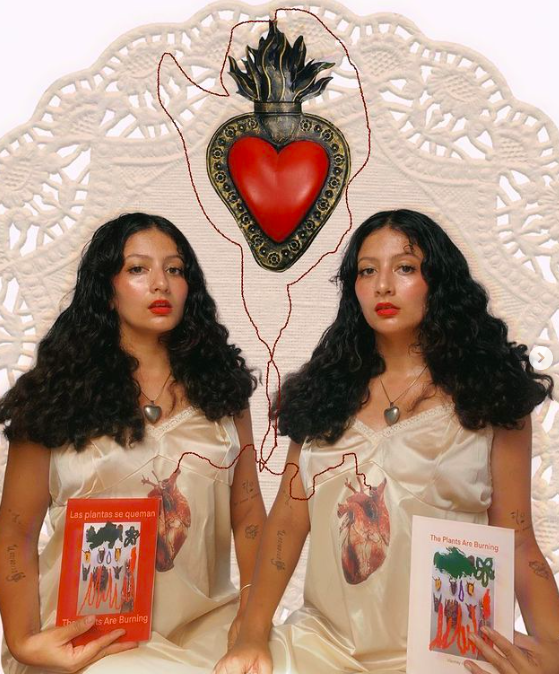
She outlines her familial background and identity through the use of two languages, two ways of imagining the same thing. The original version of this book (seen on the bottom left) contains entire poems in Spanish, English, and multiple writings that are a blend of the two. I especially enjoyed reading the ones that are in ‘Spanglish’ because they depict the life that many of us live: a combination of cultures, point of views, and unique ability to add layers to a moment and feeling.
The way I would describe this is by having English represent the color blue and red being Spanish. A picture with blue tones is able to convey a message, however, the incorporation of red shadows, births the creation of an in-depth perspective and emergence of a completely different entity when the two intersect (purple).
The ability to see purple, is the ability to understand complex emotions that cross over from one language to the next.
Sam Guerrero
The Plants Are Burning, composed of 62 pages, holds a significant amount of vulnerability and personal content despite the book’s thin appearance. The reader is presented extremely raw emotions that describe the complexity of a young girl’s childhood as she faces ground shaking experiences.
The lack of page numbers allow for a fast read combined with Harelly’s unwavering ability to pluck multiple petals at once, revealing instances of tristeza (sadness) during her childhood that lay bare the wilting structure that is her relationship with her father. Her mother on the other hand, is someone who she feels responsible for, to care for because of the heartbreak she experienced which Harelly herself witnessed and absorbed. This book is both a letter to her parents, but also to herself, to remind her of the strength that is needed to heal enduring generational wounds.
Planta y Fuego (Plant & Fire)
This overarching idea of the plants burning gives the reader a visual image of the soul-wrenching occurrences in Harelly’s life.
Las plantas se queman,
Vianney Harelly
Las voy a apagar con mis lagrimas
The phrase above translates to– The plants are burning, I’m going to put them out with my tears. By analyzing the text, deeper connections can be made. For instance, “the plants are burning” signifies something bad that has happened, the fire imagery presents the intensity of the event and the generation of tears represents the emotional response of the person experiencing all of this.
Harelly uses prevalent motifs and images to bring up certain topics in her life.
- Plants– life, death, growth, burial
- Fire — her cousin Jared died in a house fire, fueling her obsession and tendency to burn dolls, and pencils at a young age
- Favorite vestido (dress)– the day her dad left
- El hombre (the man)– cousin, boyfriend, father, people who have tried to take advantage of her
- The color orange– the fruit, her father’s jumpsuit in jail, hue seen in fire
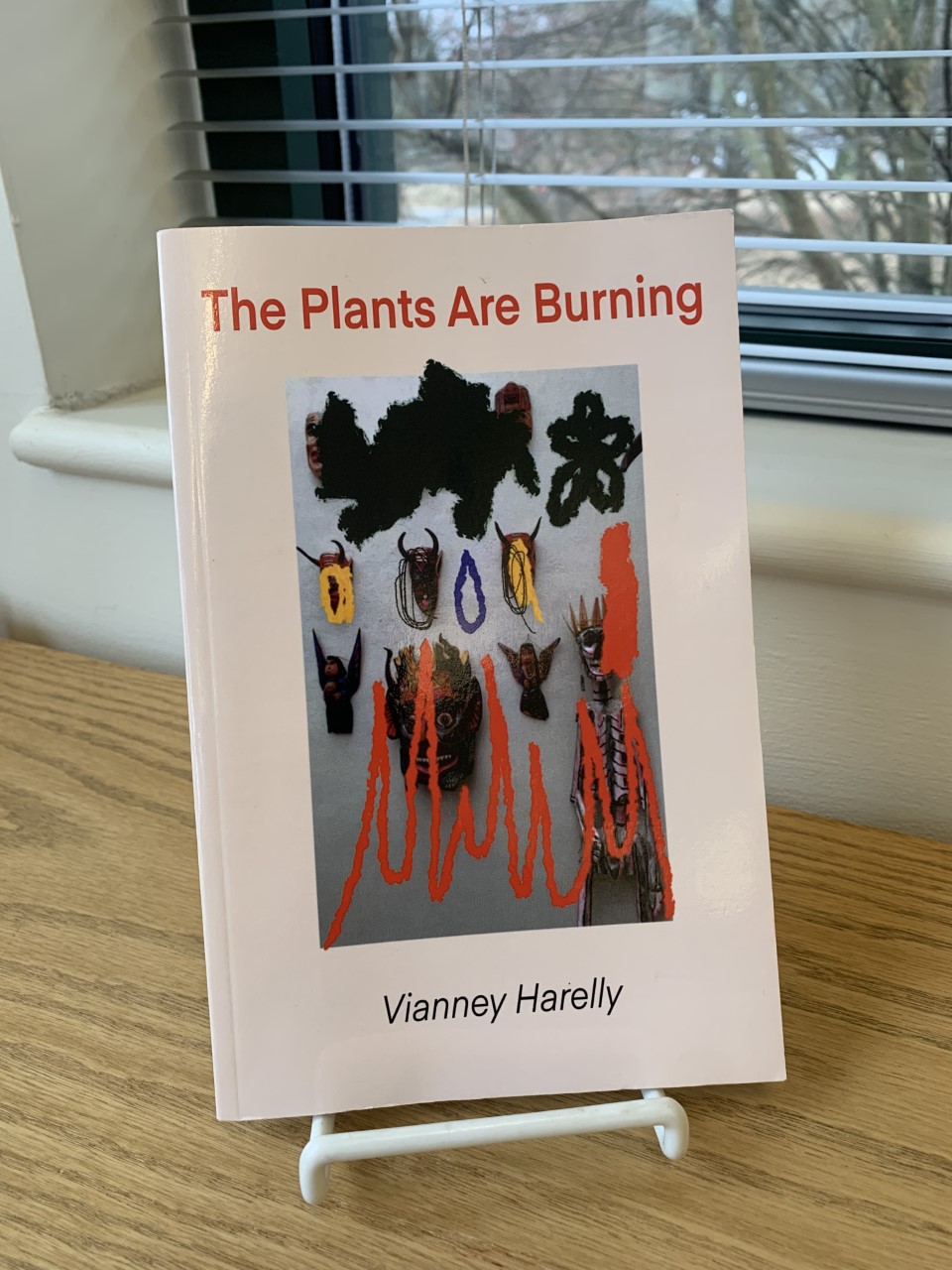
Harelly goes beyond writing about her experiences through the incorporation of famous novels, paintings, characters in stated works, and the use of a literary technique called Realismo Mágico (Magic Realism).
This, along with her vulnerability, and tendency to write in enjambment makes her writing enthralling to read as someone who understands both languages.
My favorite poem…
- Gabriel
- Frida Kahlo’s Raices— her mother’s suffering, tears made the plants grow
Conclusion …
Keywords: nostalgic poetry, magic realism (realismo magico), generational trauma, healing love letter, spanglish, inner child

