Writer, Editor, Digital Director
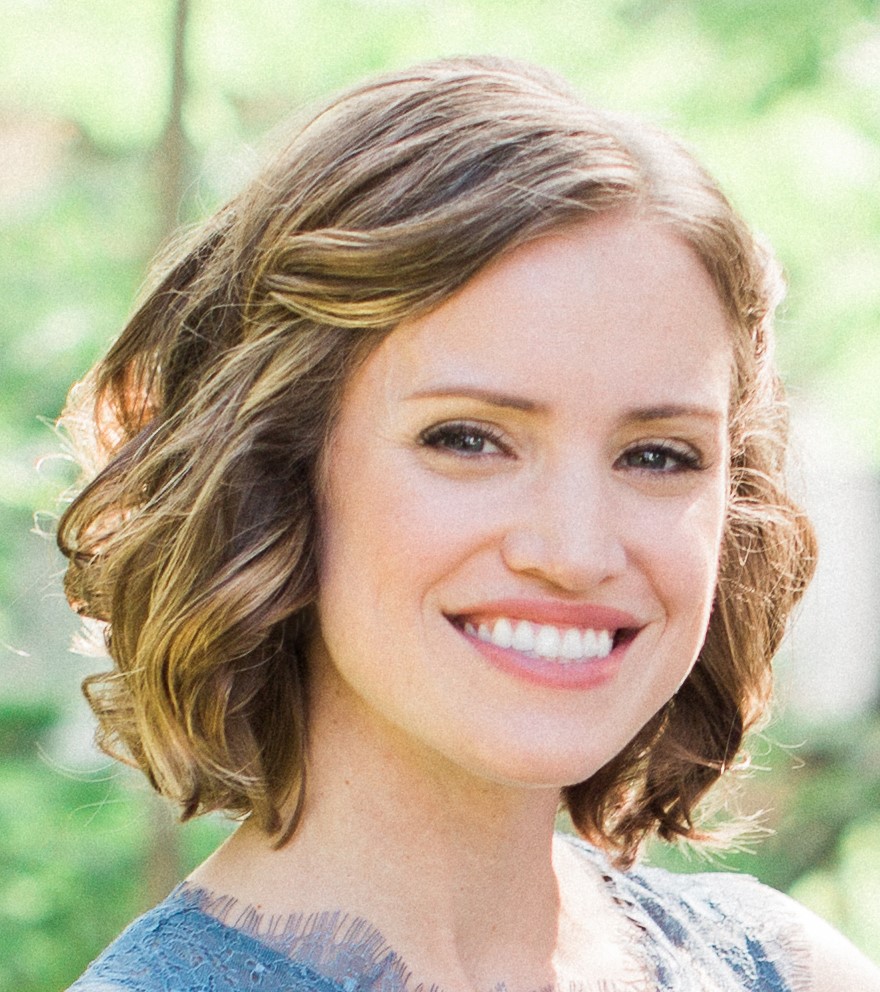
It is no secret that a career in writing is almost never in the form of a linear path. The intent and desire to write is like a stationary mountain. However, good writers are inquisitive travelers who use the mountain to guide them when presented with multiple paths to embark on. That is why I believe the modern day writer is someone who is not only passionate about writing but also adaptable, yet curious about the environment presented before them. So is the case for Elizabeth Florio, digital editor for Garden & Gun. On April 11, 2023 I conducted an over the phone interview with Florio to learn more about freelance writing and what it’s like working for a national digital magazine.
Early interest in writing
As a child, Florio’s love for reading led her to frequently indulge in the creative process by writing her own stories. In high school, she became a member of her school newspaper but her interest in becoming a journalist was still rather faint. When tasked with choosing a major before college, her love for writing directed her toward English and International Studies at Northwestern University in Chicago. During her undergrad, she occasionally contributed to the school’s daily paper and was able to obtain artifacts that showed her writing and editorial skills.
Back to her roots
After graduation Florio moved back home to Atlanta. She started off working for small local media publications by grabbing coffee with personnel from those outlets. “I was able to get internships and experience by directly talking to kind people who were willing to take me in,” Florio said. “Establishing initial relationships is what helped me land several writing jobs.” She mentioned that contacting those who were already doing what she wanted to do was typically well received. “Most people are flattered when you say you want to learn from them. From my knowledge, Atlanta is a tight knit community for writers, it’s not like New York, people in the journalism industry here are willing to guide those who are seeking mentorships.”
“Most people are flattered when you say you want to learn from them. From my knowledge, Atlanta is a tight knit community for writers, it’s not like New York, people in the journalism industry here are willing to guide those who are seeking mentorships.”
Elizabeth Florio
Networking
Florio worked hard to form those initial connections; it was a constant effort of advocating for herself and reaching out to people. It was not until she spoke with her peers who majored in journalism that she realized they had made those connections before entering the job market. “Their program required them to get an internship before graduating, resulting in having those relationships, experience and contacts beforehand,” Florio said.
Her English degree showed her the mechanics of good writing, but specific reporting skills was something she had to obtain while on the job. Despite not having those reporting credentials, Florio’s awareness of her weaknesses and ability to say, “hey this is where I need help in, and who can I learn from,” is what lead her to succeed.
Directly learning from those before her enabled her to work her way up from copyeditor to digital director at Atlanta– the city’s premier general interest magazine where she worked for nine years.
Freelancing
Becoming a mother of two young children, Florio wanted flexibility in her schedule. That is when she made the decision of leaving Atlanta magazine and set her eyes on freelancing. As a freelancer, the typical model for getting paid looks something like this: a writer is paid per article, flat fee, meaning an amount is discussed for a single task and it typically doesn’t waver according to the amount of work or hours one puts in. Writing articles is a one time gig. In some cases it might lead to other opportunities, but the initial agreement is just the one article.
Freelance Editing. The nature of editing secured Florio with a contract every month. Typically the larger the projects she would have to edit, the longer the contract would be, such as six months (paid per month). The type of editing involved depended on the medium of the publication.
[Print.] She produced magazine materials such as travel guides and visitor’s guides for magazines that needed them. It involved working with the publication and discussing what was needed, tapping into her network of writers, and working with a designer for the layout and captions. Line editing, a more in-depth version of copy-editing, required Florio to check for grammar, flow, and then package it up in a google doc and then a designer would turn it into a tangible magazine.
[Website.] Editing for a website was not as complex. Those she worked with would have a story idea, they would send a doc, and her editing would be online– instantly.
Being a tinker
Those around Florio describe her as a tinker, someone who spends time with each project she is given. No matter what title she wears, writer, editor, digital director, it is in Florio’s nature to double-check her accuracy and extensively edit her own work. She mentioned that being a slow worker isn’t necessarily a bad thing, it means you care about the work you are producing. That kind of attentiveness and ability to slow down can help you in the long run. “I have found that editors are inclined to work with writers who can send in a fairly clean document because it removes any heavy lifting for them,” Florio said. “It demonstrates your meticulous work ethic and commitment to getting the facts right in journalistic writing.”
Garden & Gun
Curating, Writing, Editing Digital Content
Florio’s most recent endeavor is Garden & Gun, a distinguished magazine about the American South, with the main pillars being: home & garden, arts, food + drink, travel, music, literature and the sporting culture. Although freelancing gave her the flexibility she needed, being a full time employee at G&G has given her the option to work remotely from Atlanta despite being headquartered in Charleston, South Carolina.
G&G is not a breaking news publication, but it does respond to news if it is relevant to the south. Florio mentioned that the array of topics it covers allows it to cater to both the female and male audience. As a digital editor, her main job entails overseeing editorial content for the website, so starting with a story on a topic and finding a writer to work on the article then editing it. Additionally, Florio contributes to the magazine as a writer, often collaborating with photographers to provide comprehensive meanings to her articles.
500 word report turns 2,000 word feature
The main difference between print and digital publications is that the latter contains more in-depth, thoughtful angles to stories because of the absence of space constraints.
One day Florio’s editor in chief came to her after seeing a tweet from the Florida Fish and Wildlife Conservation team about a whale that had been caught in a fishing rope. Her curiosity and previous interest in whale-watching made her the perfect writer for the story. The initial task was to cover the entanglement. After doing research talking with multiple sources Florio realized the story was bigger than just the entanglement.
Her in-depth feature covers the dangerous task of freeing a forty-foot right whale, the remarkable work of marine & wildlife biologists, rescue teams and lead responders, and concludes with the need for policy change and new fishing technology. She mentioned that sometimes it is best to stick to the initial assignment, or run it through an editor to see if the piece can be extended. However, in her case as the digital editor, she had the freedom and ability to turn it into a full-blown feature for G&G’s website.
Takeaways
In Florio’s opinion, the important skills to have whether you are writing for a print or digital forum is good writing. It constitutes the largest sector of creating an interesting story through original research and a specific angle. A pretty story for her is one that is grammatically correct, it reduces communication noise, and it creates flow by not distracting the readers.
Paying attention to details shows that you care about the work you are putting out and how it looks to the readers. In a fast-paced world, it is easy to develop habits that suck the life out of good writing. It can lead producing mediocre work full of errors and inconsistencies. Elizabeth Florio’s rigorous character allowed her to thrive in the journalism industry, her education gave her the skills needed when editing, and her consistent desire to educate herself and grow enabled her to become an accomplished & well-versed individual in the content production sphere.
See it as a feature/ magazine story below!
Style by Sam Guerrero