Good writing entails collaboration and receptiveness to outside sources. As a student of life, I find it beautiful how we can constantly learn from others and their experiences. It is that gathering of knowledge that opens the entryway for connections, relationships and more in-depth understandings/ narratives.
1.) Importance of Sharing Stories, Finding Translations
Presented by the Paul & Beverly Radow Lecture Series on Jewish Life— Kennesaw State University staff and students gathered to hear esteemed culinary historian & award winning author, Michael W. Twitty, Thursday Jan. 26 in the Wilson Building on the Kennesaw Campus.
Gradually, the seats inside the Stillwell Theater filled up, and the lights were dimmed to create a calm and intimate environment. Norman Radow, KSU’s benefactor, shed light on the power of the humanities and explained how this lecture series honors his parents as well as teaches Judaism in a positive way.
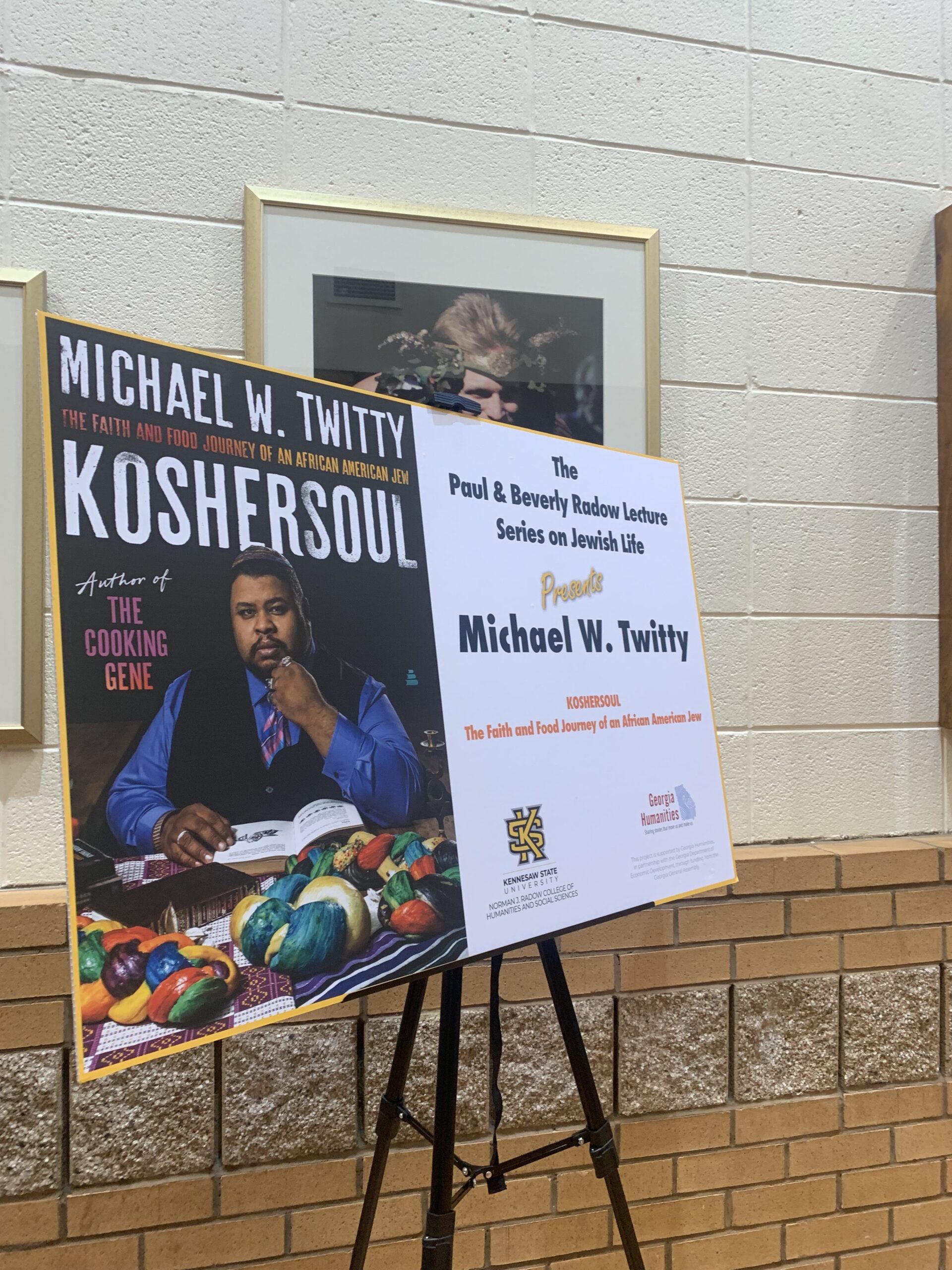
Seneca Vaught, professor of History and Interdisciplinary Studies, introduced Twitty and provided some background on the guest speaker. Twitty then was welcomed with a roaring round of applause from the audience as he took the stage.
Identity, Racism, Family, Injustice and Erasure of Stories—Michael W. Twitty described himself as a border-crossing individual. The essence of who he is reflects his dedication to living life as a queer, African American Jew, but foremost an educator, scholar and thinker. On the topic of identity, he mentioned that our distinct race, gender and lineage is something that should not be met with aversion and hate. “Faith and love make the world an honest, welcoming dinner table,” Twitty said. These differences do not make us broken, we do not need to be repaired, for we are not stumbling blocks, we are just what we are.
“Faith and love make the world an honest, welcoming dinner table.”
He then addressed the audience by mentioning that each and every person is a blend of those who came before them along with their unique experiences; ergo, no single person can escape intersectionality. Understanding ways people are similar, but also being explicit when it comes to who you are is what Twitty refers to as, “A well seasoned response to racism.”
When people gather, stories are passed from person to person, one stranger to the next, however, Twitty warns against the testament of time and the potential stories have to be forgotten, lost, or distorted. Twitty pushes people towards finding translations, hearing other perspectives because as the jewish saying goes– it is never on one foot, Twitty said. Seek answers, but also write down your own story, even if you think its niche, so that those who come after you don’t spend their time looking for it.
From one writer to the next, Michael W. Twitty encouraged me to curate my own existence and that the words I put down on paper are purposeful. They bring the stories of my ancestors to the surface, as well as educate those around me about my identity and experience from my seat at the all-encompassing dinner table. Twitty ended his conversation with us by stating that we should never stop looking for family, those who provide the love and faith needed to continue our soul-searching journey towards loving ourselves and those around us. For all his wisdom and beautifully honest reminders I say, Shabbat Shalom.
Books
- Koshersoul: The Faith and Food Journey of an African American Jew (2022)
- Rice: A Savor of the South Cookbook (2021)
- The Cooking Gene (2017)
2.) A Starting Place: KSU Writing Center
The KSU Writing Center provides writing assistance to students of all majors from business, to nursing, truly any student can benefit from their resources. The center hires undergraduates who enjoy providing feedback and reviewing their peers’ work–making them the perfect supporters of student writers.

Although I was introduced to the writing center my freshman year, I never seeked out their resources until later in my senior year. In retrospect, there are times I would have benefitted from guidance and clarity that the center provides. Especially during the pandemic, I often felt like I was alone when it came to learning academic writing. Weirdly, the isolation pushed me to learn those things myself, often having the book A Writer’s Reference close by.
One thing I noticed at the center is that they have multiple copies of A Writer’s Reference, (tenth edition) to assist students when it comes to academic reading and writing, research writing, different writing styles (MLA, APA, CMS), punctation and mechanics, sentence style, word choice and basic grammar.
Slaying the intimidating, meaty dragon.
My latest visit did not involve any actual writing. The opposite really. As a senior about to graduate, I realized I wasn’t expressing the same enthusiasm and excitement as my fellow peers. All semester I had felt like I was dragging my feet, not wanting to imagine a life outside of school, outside of what I had known for the past 17 years. Anxiety hit me like a stormy ocean wave and established a feeling of being paralyzed within me. I noticed I needed help.
Amber Stokes, office manager at the Writing Center, reminded me that everyone, even seniors have writing-related anxiety, often emerging from bigger life changes.
“That is when you come to the writing center,” Stokes said. “People think we are here just to look over writing that has already been done, but we also help writers establish a starting place through a sounding board. Even if you come in just to express how daunting an assignment is for you, we are here to listen and provide a game plan.”
Stokes mentioned she knows people who have picked up another degree to continue being in school and not place the real world. After being in school for so long, the transition outside of anything other seems impossible. However, school is just that: schooling for an individual to then contribute to society by applying those acquired skills and capabilities.
“It happens to the best of us,” Stokes said. “However, finding a support system that can help you navigate that time, along with counseling services will allow you to make well-balanced decisions.”
Writers aren’t perfect, or immune to human struggle, if anything, the great body of literature that exists confirms that claim.
The center is located on the second floor of the English Building, room 242. They provide free coffee!
3.) It is Never too Late: Author Signing Event
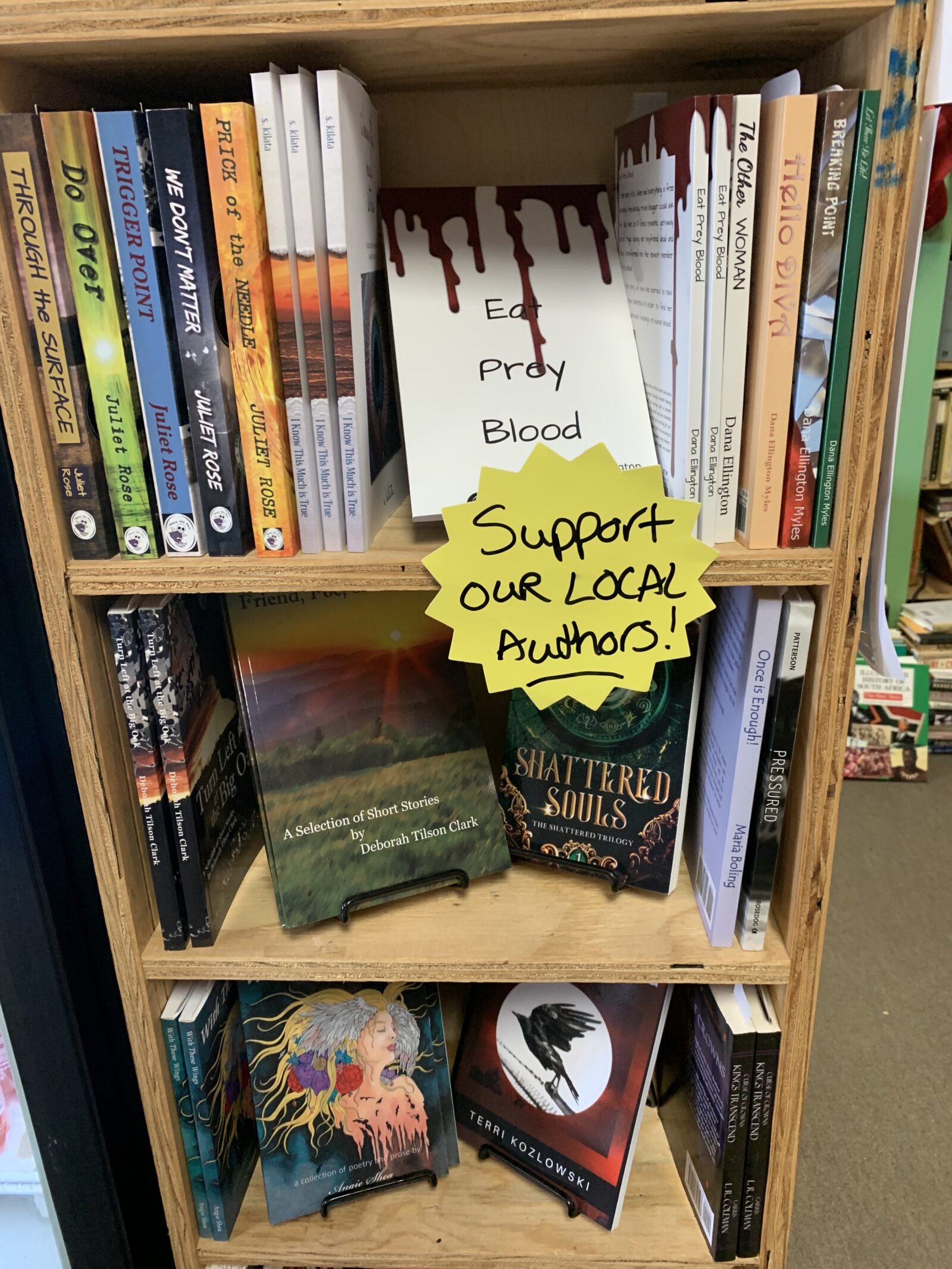
On Saturday, April 29th, I attended an author signing event that was honoring National Independent Bookstore Day. The Crazy Book Lady, a local bookstore in Acworth hosted the event to celebrate regional authors and thank the community for their unwavering support.
As I walked around meeting the authors and learning about their writing careers, a common theme started to become clear: it is never too late. Most of the authors I met were people who had worked in sales, education, journalism, and were recently turning their hobby of writing into tangible artifacts. With self-publishing, the stories came to life in the form of paper-back books, solidifying their passion for writing and creative pursuits.
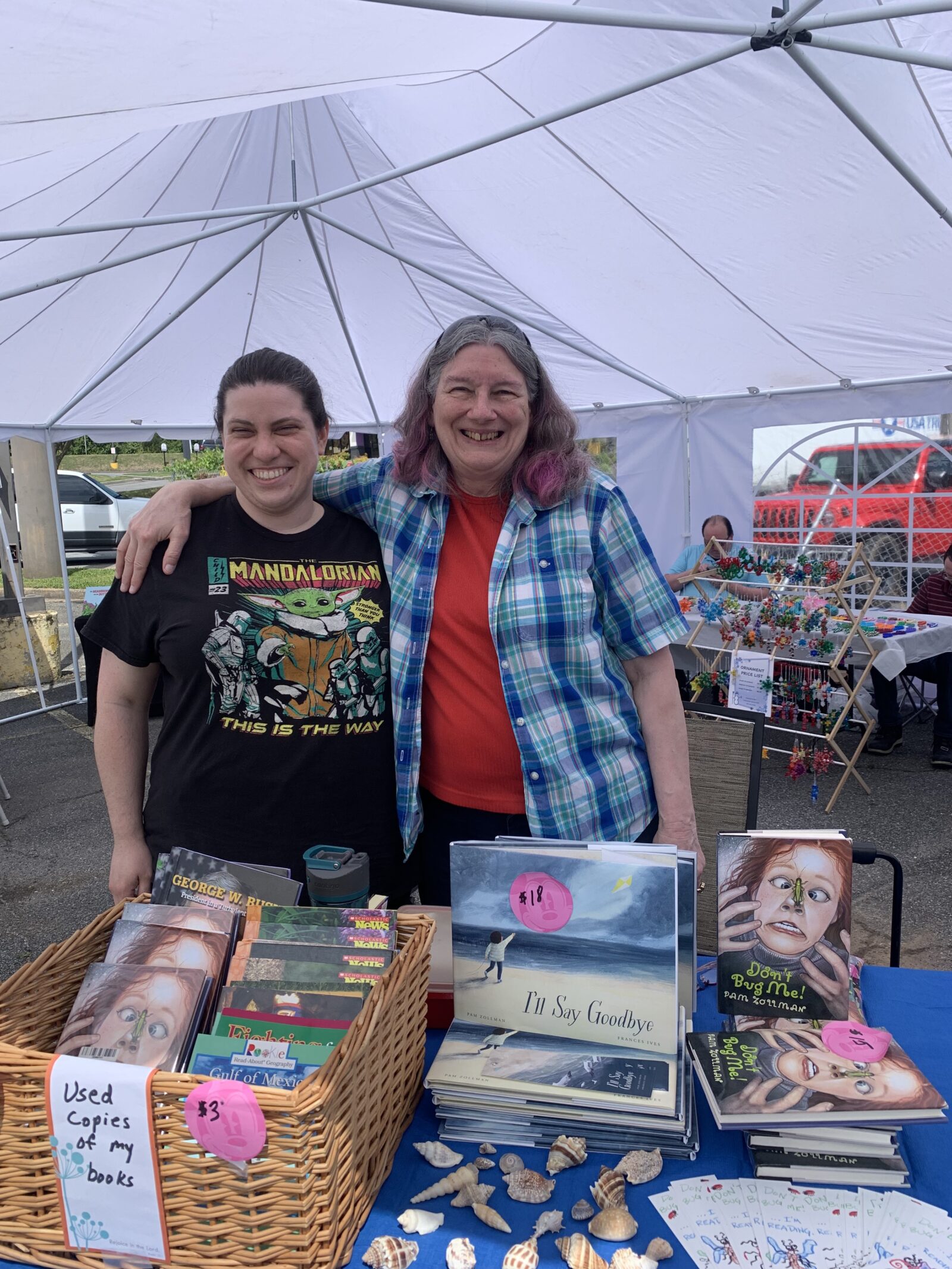
They encouraged me to write a book, get it published, and present it to local bookstores who are more than willing to make room for local authors. The connections I made that helped me demystify the world of book publishing but also photography, journalism, magazine writing, and prominent publications like Scholastic.
“This isn’t the ’70s anymore,” Pam Zollman said. “Back then it was uncommon to bump into a local authors and have writing resources and communities at one’s fingertips. Getting your book published is possible, I got mine with Scholastic– multinational publishing media company.”
Accomplishing our dreams and getting our work published is not impossible. It is never too late to advocate for our writing abilities and have others take note of that!
